
One Climbing wall in the garden It's the dream of many families – and a real magnet for children to move around. But different rules apply outdoors than in the playroom: rain, frost, sun, and fallen leaves take their toll on wood, handles, and screws. In this guide, you'll learn how to plan an outdoor climbing wall, which materials are suitable, and what you need to consider regarding fall protection.
- Location: Ideally protected, with a flat, unobstructed fall area free of edges and obstacles.
- Construction: Weather-resistant panels, cleanly sealed edges and stable anchoring.
- Handles: Robust PE or PU handles, regularly checked and tightened.
- Fall protection: From a fall height of 0.6 m, shock-absorbing substrate; above 1.0 m, fall protection according to DIN EN 1176-1 (based on the daycare center guidelines).
- Permit: Check with the local council before construction begins.
Location and planning
- Keep the area clear: No flower bed borders, stones, garden furniture or fences in front of the wall.
- Level ground: The surface must be level for fall protection to be effective.
- Protection from the weather: A wall that is under a roof overhang or has a small roof will stay dry for longer.
- Sun: Full midday sun heats up handles and plates – shade in the afternoon is more pleasant.
- Permit: Whether you need one depends on the size of your property and the state you live in – ask your local council.
Construction and material
Outdoors, wood and fixings have to withstand significantly more than indoors. These points are crucial:
| component | Pay attention |
|---|---|
| substructure | weather-resistant wood or metal, stable foundation or secure attachment to a load-bearing wall |
| records | Weatherproof panels, seal edges, water must not be allowed to pool. |
| T-nuts & screws | corrosion-protected, check regularly |
| Distance to the ground | The slabs should not be placed directly in the ground to prevent them from becoming permanently damp. |

Seal every drilled hole and every panel edge before installing the wall. Water seeping into an open edge is the most common reason why an outdoor wall swells after a few winters.
Fall protection in the garden
There are no regulations for private gardens that apply to daycare centers – however, the values in DGUV Information 202-018 for daycare centers and schools are a good guideline for outdoor areas:
| Free fall height | Subsurface according to DGUV Information 202-018 |
|---|---|
| up to 0.6 m | no special requirements |
| 0.6 to 1.0 m | shock-absorbing surface |
| over 1.0 m | Fall protection according to DIN EN 1176-1 with minimum depth |
For walls up to 3 m high, the impact area should extend at least 2 m in front of the wall. For children, we recommend a low truss wall – more information can be found in [link/section]. Climbing wall in the children's room and Climbing wall in the daycare center.
Outdoor handles
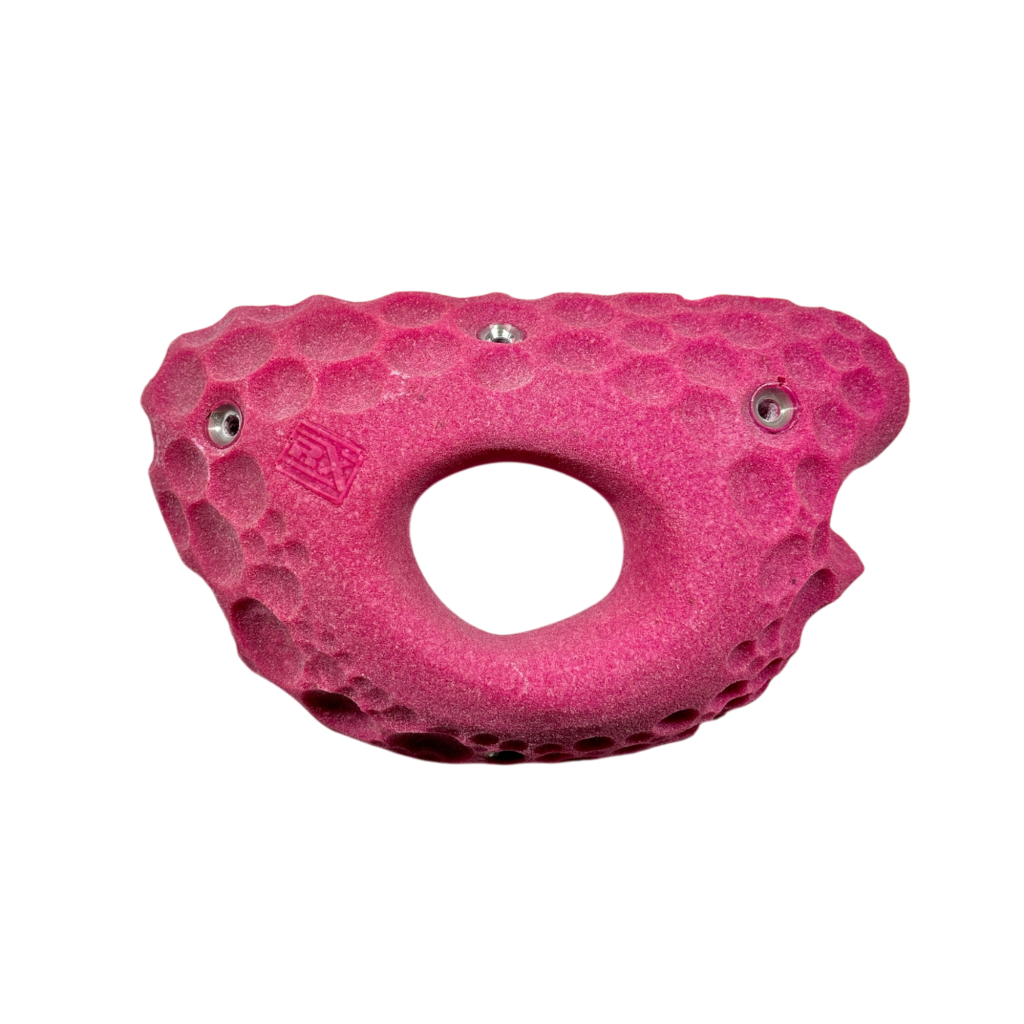
Robust handles made of [material] are suitable for outdoor use. Polyester (PE) or Polyurethane (PU). Look for a surface that remains grippy even when slightly dirty, and choose large, durable shapes suitable for children. Many of our handles, like the Sloper Diamond M1 They are designed for indoor and outdoor use. You can find detailed instructions in Climbing holds for outdoor climbing walls.
Care and winter
- Clean regularly: Remove leaves, moss and dirt.
- Check the screw connection: Tighten handles, replace damaged handles immediately.
- Maintaining fall protection: Loosen and fill with wood chips or sand.
- Winter break: Remove delicate handles, check plates.
Are you planning a climbing wall in your garden?
We'll advise you on construction, grips, and fall protection – and build the wall completely if you wish. Send us a few photos of the location.
Frequently asked questions about the climbing wall in the garden
Which climbing holds are suitable for outdoor use?
Handles made of robust polyester (PE) or polyurethane (PU), suitable for outdoor use according to the manufacturer. UV and weather resistance are important, as is regular inspection of the screw connections. More information can be found in our article on... Outdoor climbing holds.
What type of surface is suitable for a climbing wall in the garden?
The guidelines for daycare centers serve as a guideline: Up to 0.6 m fall height there are no special requirements, between 0.6 and 1.0 m a shock-absorbing surface is needed and above that, fall protection according to DIN EN 1176-1, for example wood chips, bark mulch, sand or fall protection mats.
Do I need a permit for a climbing wall in my garden?
That depends on the size, design, and state. Check with your local council before building to see if a permit is required.
How do I protect an outdoor climbing wall in winter?
Clean the handles, check the screws, and replace any damaged ones. If possible, remove delicate handles for the winter and additionally protect the edges of the slabs from moisture.
About the author: Raul Ortiz has been climbing since 2006, develops and casts climbing holds and fibreglass volumes with RX Climbing Holds in Miesbach, and regularly sets boulder and rope routes in climbing gyms in Upper Bavaria. More about us
 English
 German