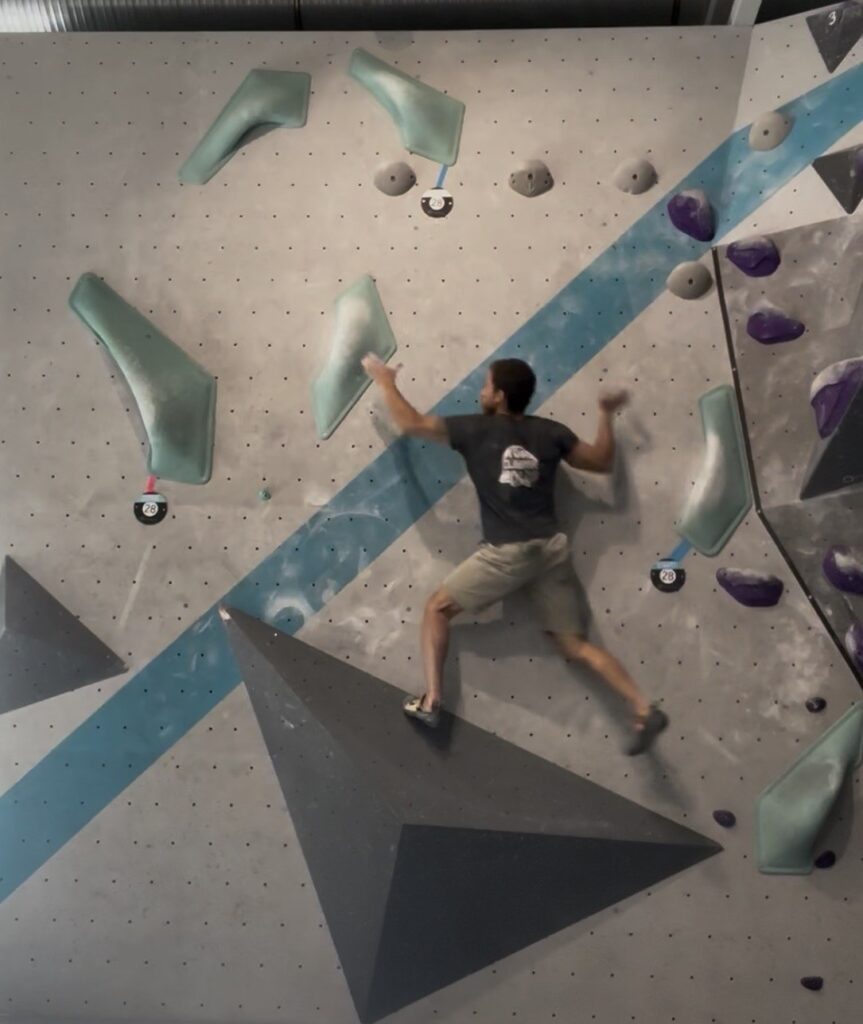
Bouldering is considered an easy entry point into climbing: no rope, no harness, just get started. Nevertheless, the majority of reported climbing gym accidents involve bouldering. Climbing gym accident statistics 2025 The DAV shows where the risk lies – and how many Injuries while bouldering Avoid them. This guide summarizes the most important figures and recommendations.
- Statistics 2025: 341 accidents were reported, with 174 of them occurring during bouldering in the detailed analysis.
- Main cause: Falls onto the mat – 155 cases.
- Injuries: 89 % affect arms and legs, ankle sprains account for 46 %.
- Most important rule: Climb down instead of jumping, where possible.
- Route building: Gentle entries, lower key sections and downclimb holds help.
What the statistics show
For the reporting year 2025, the German Alpine Club (DAV) received a total of 341 reports of accidents. A detailed analysis of 252 cases revealed that 174 involved bouldering and 68 involved climbing. In bouldering... Falls onto the mat With 155 cases, it is by far the most common cause.
| Accident description during bouldering | Percentage according to DAV |
|---|---|
| Ankle sprain | 46 % |
| Fall onto upper extremity | 27 % |
| Fall onto the torso | 1 % |
| Miscellaneous | 26 % |
Overall, 89 percent of injuries affect the arms and legs. In children and adolescents, the arms are more frequently affected, while with increasing age, the legs and torso are more commonly involved.
This is how you avoid injuries
- Climb down instead of jumping: The German Alpine Club (DAV) recommends downclimbing where possible – especially after reaching the top.
- Practicing falling and landing: According to the German Alpine Club (DAV), proper falling, landing and spotting techniques should be learned and practiced regularly.
- Keep the fall zone clear: Do not stand or sit under bouldering mats, and keep water bottles and bags away from the mat.
- Warm-up: First easy boulders, then harder moves.
- Stay honest: On high, unsafe moves, it's better to climb down beforehand than to risk an uncontrolled fall.
The basic rules for the hall are also in the article. The five safety rules for climbing gyms.

When setting a boulder problem, always consider the descent route: Is there an easily accessible hold for downclimbing after reaching the top? A single well-placed downclimbing hold can prevent many hard landings.
What halls and route setters can do
The statistics are explicitly aimed at route building as well. The DAV (German Alpine Club) states relatively gentle entry points, lower key positions and so-called Downclimb holds. This requires enough suitable holds in the hall – large, durable holds for downclimbing and a mix that allows key sections to be deliberately placed.
Large, easily accessible handles next to the top area.
Keep the first few moves light so that no one falls uncontrollably from the starting move.
Place the more difficult moves towards the lower part of the boulder.
Route setting with a focus on safety – see Route changes.
Children: the DAV bouldering certificate
According to the 2024 accident statistics of the German Alpine Club (DAV), Bouldering certificate Designed for children and teenagers. Level 1 is aimed at children aged approximately 6 to 10 years with their parents and bouldering novices: proper behavior in the bouldering gym, bouldering with supervision and responsibility. Level 2 is for approximately 10- to 14-year-olds with some experience: injury prevention, tips for better bouldering, and an exam.
How to set more secure bouldering routes?
RX Climbing Holds supplies holds and GRP volumes for climbing gyms and, if desired, takes over route setting – with a focus on safe entry points and downclimbing holds.
Frequently Asked Questions
What is the most common injury in bouldering?
According to the German Alpine Club's (DAV) climbing gym accident statistics for 2025, falls onto the mat are by far the most frequent cause of accidents in bouldering. 89 percent of injuries involve arms and legs, with ankle sprains accounting for 46 percent.
When bouldering, should you jump down or climb down?
The German Alpine Club (DAV) recommends: Where possible, downclimb instead of jumping. However, proper falling and landing techniques should still be learned and practiced regularly.
What is the DAV bouldering certificate?
A course offered by the DAV for children and young people in two levels: Level 1 for approximately 6- to 10-year-olds with parents, Level 2 for approximately 10- to 14-year-olds with initial experience.
What can indoor sports halls do to improve safety during route setting?
The German Alpine Club (DAV) suggests gentle entry points, lower crux sections, and so-called downclimb holds that allow for safe descent. More information can be found in the article. Route changes.
About the author: Raul Ortiz has been climbing since 2006, develops and casts climbing holds and fibreglass volumes with RX Climbing Holds in Miesbach, and regularly sets boulder and rope routes in climbing gyms in Upper Bavaria. More about us
 English
 German