
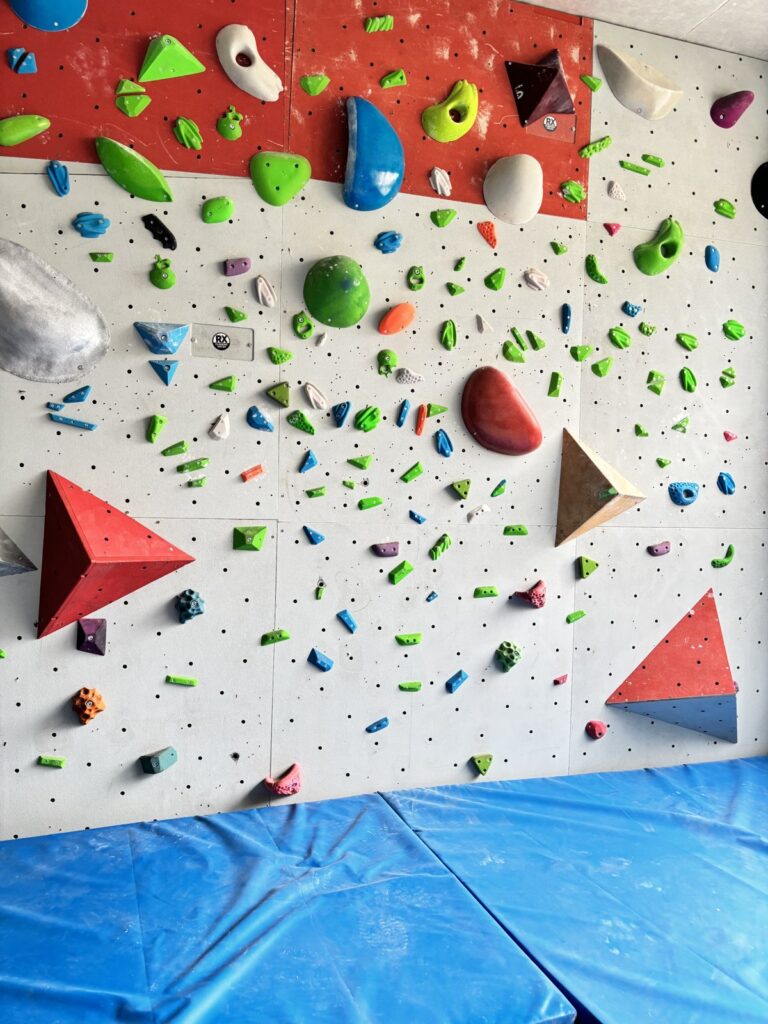
Anyone who has been to a bouldering gym in recent years has seen them: large, angular or round elements that protrude from the wall and determine entire movement sequences. Climbing volume and macros have changed bouldering. In this article, we'll explain what volumes are and why. Fibreglass volume how popular they are, how you use them in route setting, and what you should pay attention to when buying and installing them.
- volume They change the wall's incline and create new footholds, edges, and movements.
- Macros are very large handles – often slopers or pincers – that are gripped by the user.
- Fibreglass (glass fiber reinforced plastic) is lightweight, stable and freely formable.
- Dual texture combines smooth and grippy zones on one element.
- Already 2-3 volumes make a small home wall significantly more versatile.
What are climbing volumes and macros?
volume These are large, three-dimensional objects – pyramids, wedges, hemispheres, or free-form shapes – that are screwed onto the climbing wall. They locally alter the incline: a vertical wall becomes an overhang or a slab at that point. Often, additional holds can be screwed onto these structures.
Macros These are very large handles. They are either gripped by the user or stepped on – typically as huge slopers, wide grips, or large handles. In practice, the line blurs: many GRP elements are both volume and handle at the same time.
Fiberglass or wood: Which material is the right one?
| Fibreglass volume | Wood volume | |
|---|---|---|
| Weight | very lightweight – easy to assemble and reposition | significantly heavier |
| forms | freely malleable, also organic shapes | mostly angular, geometric |
| surface | Grippy texture possible, also dual-texture | Wood, some with a textured coating |
| handles on it | depending on the model | usually provided with T-nuts |
| Price | higher | usually cheaper |
We manufacture our volumes and macros from Fibreglass in our workshop in Miesbach. The advantage becomes apparent when handling the components: A large GRP volume can be handled by one person, whereas a similarly sized wooden volume quickly requires two people to carry. You can read more about all the materials in Climbing hold materials compared.
Volume in route setting: More bouldering from less wall
For route setters, volumes are the most effective tool. A volume can be the main idea behind a boulder problem – or an inconspicuous foothold that makes a movement possible in the first place. Typical uses:
- Create incline: A local overhang or slab forms on a vertical wall.
- Edges and intersections: Two volumes placed side by side create an intersection for chiseling.
- Coordination & competition style: Large elements allow for jumps, runs, and dynamic moves.
- Technical training: On sloping surfaces, climbers must consciously use friction and body position.
- Beginner bouldering: Large volumes used as footholds make bouldering easier without being boring.

Don't just place a volume in a gap. First, consider what movement it should force – pushing in, shoving, or sliding over – and then build the boulder problem around that. That's how the problems people later talk about are created.
Dual texture: two surfaces, one element
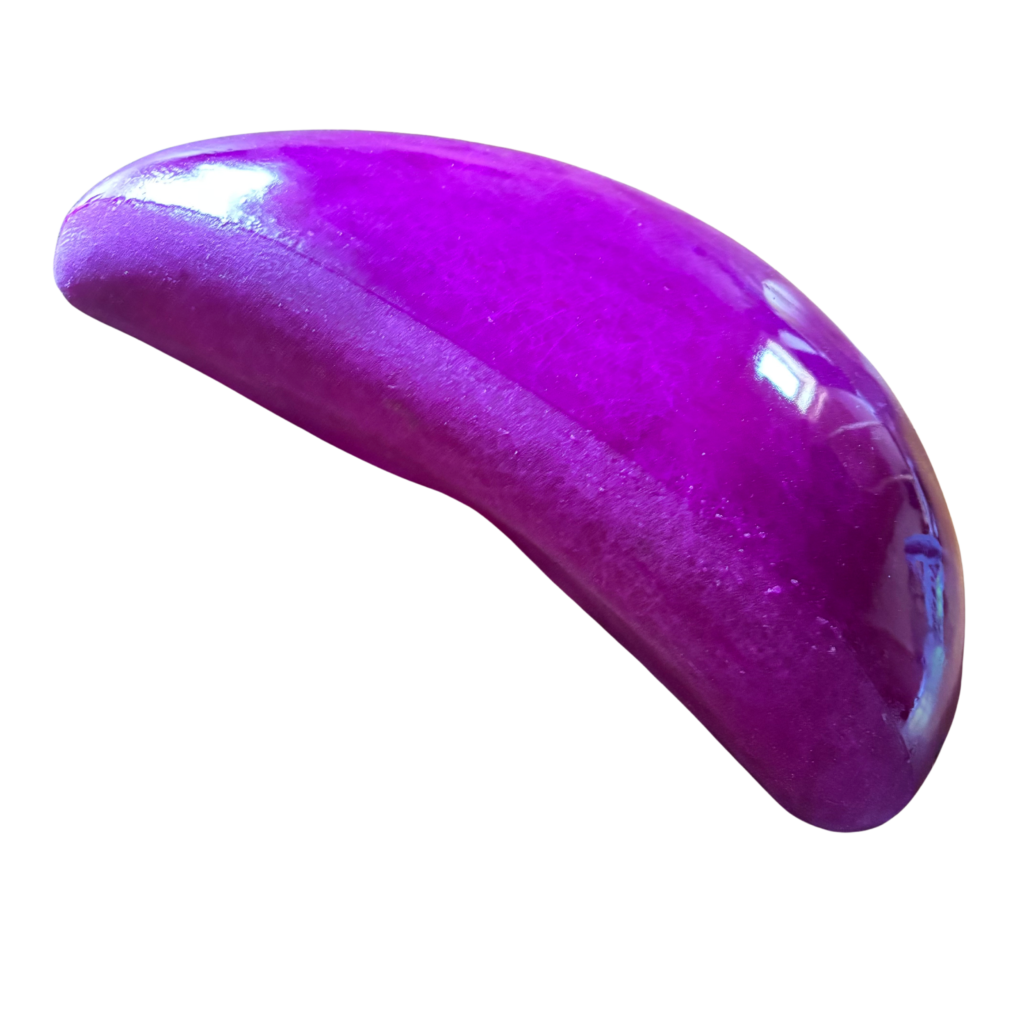
At Dual texture Each element has two different surfaces: a smooth and a grippy zone. Route setters use this to precisely control where holds or footholds are possible – and where they are not. This makes the boulder problems more precise and varied. Learn more on our website. Dual-texture climbing holds and in the article Grip and surface texture.
Assembly and safety
Volumes must firm and twist-proof They are installed. Depending on the model, they are secured with screws into the wall's threaded inserts and additionally with wood screws. Pay attention to the following points:
- Check the substrate: The wall panel must be load-bearing and undamaged at this point.
- Use multiple attachment points, so that the volume cannot rotate.
- No pinch points: No gaps should form between the volume, the wall, and the handles where fingers could get stuck.
- Check regularly: Tighten the volume and handles when unscrewing and during regular inspections.
General instructions for secure screw connections can be found in Safety on the climbing wall.
What volume for which wall?
Small to medium volumes that create footholds and angles – e.g. The Leaf (Dual-Tex).
Medium-sized dual-texture volumes such as Evolution 1 for precise friction climbing.
Large macro shots as eye-catchers, e.g. the XXL-Sloper RBK.
Flat, large volumes as simple footholds – never as a jamming trap.
You can find all models in our category Macros & fibreglass volume. And if you want to handle them beforehand: At our open training wall in Miesbach Many depend on it.
Are you looking for volume for your wall or hall?
We'll advise you on size, shape, and mounting – and manufacture in your desired color upon request. We create customized offers for halls and other large spaces.
Frequently asked questions about climbing volume
What is the difference between volume and macro?
Volumes are large, usually geometric shapes that alter the wall's angle and often allow for the attachment of additional handles. Macros are very large handles that are gripped manually. The distinction is fluid – many fiberglass elements function as both.
Are GRP volumes better than wood volumes?
Fiberglass volumes are significantly lighter and can be freely shaped, including textured surfaces and dual-texture finishes. Wooden volumes are usually less expensive and are well-suited as a base for additional holds. Many walls combine both materials.
How are climbing ropes attached?
Depending on the model, secure the unit with screws into the wall's threaded inserts and additionally with wood screws to prevent rotation. The unit must be firmly and securely mounted to prevent twisting and should be checked regularly. We explain the appropriate mounting method for each of our units.
Are large volumes worthwhile even on a small home wall?
Precisely there. Just two or three volumes change angles and movements so drastically that a small wall offers significantly more diverse bouldering opportunities.
About the author: Raul Ortiz has been climbing since 2006, develops and casts climbing holds and fibreglass volumes with RX Climbing Holds in Miesbach, and regularly sets boulder and rope routes in climbing gyms in Upper Bavaria. More about us
 English
 German