
Not all climbing holds are created equal – and that's not just because of their shape and color. The material a hold is made of significantly influences how it feels, how long it lasts, and what it's best suited for. In this article, we compare the most important materials used for climbing holds: polyurethane (PU), polyester resin (PE), wood, and fiberglass (FRP).
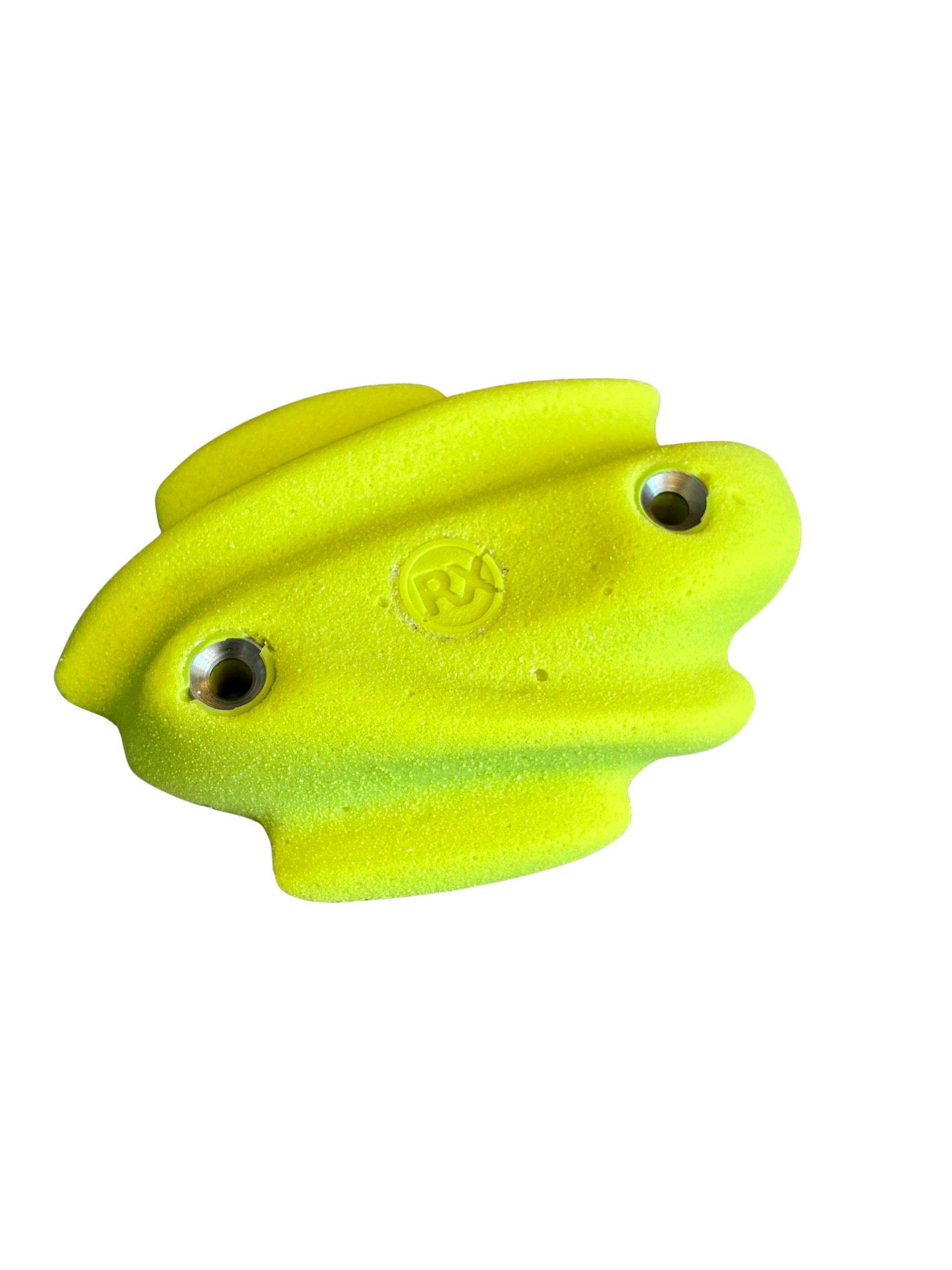
Polyurethane (PU) – The classic material for climbing gyms
Polyurethane is one of the most commonly used materials in modern climbing gyms. PU holds can be molded with great detail, allowing for fine structures and precise textures – perfect for technical footholds and handholds with plenty of character. The material is relatively lightweight and offers a comfortable, grippy surface.
The disadvantage: PU is somewhat more sensitive to UV radiation and can fade or become brittle more quickly when exposed to direct sunlight outdoors. This is generally not a problem for indoor use.
Polyester resin (PE) – Robust and inexpensive
Polyester resin holds, often simply called PE holds, are the more robust and usually cheaper alternative to PU. They are more resistant to UV radiation and weathering, making them the preferred choice for outdoor walls and bouldering facilities. However, they are slightly heavier and the level of detail in their manufacture is somewhat lower than with PU.
PE holds are particularly popular for large sets and training holds where durability and a fair price are paramount.
Wood – Natural and extremely durable
Wooden holds have a unique charm: they feel warm and natural and are extremely resistant to wear and tear. For this reason, they are particularly popular for fingerboards and hangboards, where a consistent, stable surface is essential for targeted finger strength training.
One disadvantage: wood can become smoother than textured resin holds when exposed to sweat or moisture. Therefore, wood is less common than PU or PE for general climbing walls with diverse routes, but it plays an important role in training.
Fiberglass (GFRP) – For large volumes and macros
When it comes to large structures – such as macros, volumes, or large surface elements – glass fiber reinforced plastic (GFRP) is usually used. Fiberglass makes it possible to produce even very large shapes that are stable yet relatively lightweight. The surface is additionally textured or coated to ensure that even large elements remain easy to grip.
Fibreglass volumes are ideal for designing climbing walls in three dimensions and creating new route possibilities through angles and overhangs.
Which material suits you best?
The choice of the right material depends primarily on where and for what purpose the holds are to be used:
- For indoor climbing gyms and home walls: PU holds are recommended because of their fine details and pleasant texture.
- For exterior walls or heavily frequented training areas: PE holds are recommended due to their robustness and weather resistance.
- For targeted finger strength training: wooden holds or hangboards for a consistent training surface.
- For large volumes, structures and three-dimensional route elements: fiberglass (GFRP).
Often the materials complement each other wonderfully: A wall with PU or PE holds, combined with a few fibreglass volumes for structure, offers the greatest variety of movement possibilities.
If this article has helped you expand your knowledge of climbing holds, feel free to browse our shop – there you'll find holds made from the materials presented here for every application. We're always happy to help if you have any questions about your selection. Until next time!
 English
 German