
Climbing and bouldering are among the few sports that challenge both body and mind – making them particularly valuable for children. Between colorful holds and exciting routes lie genuine developmental benefits: from coordination and concentration to self-confidence. In this article, we show the advantages of climbing for children's motor and cognitive development – and what parents should keep in mind.
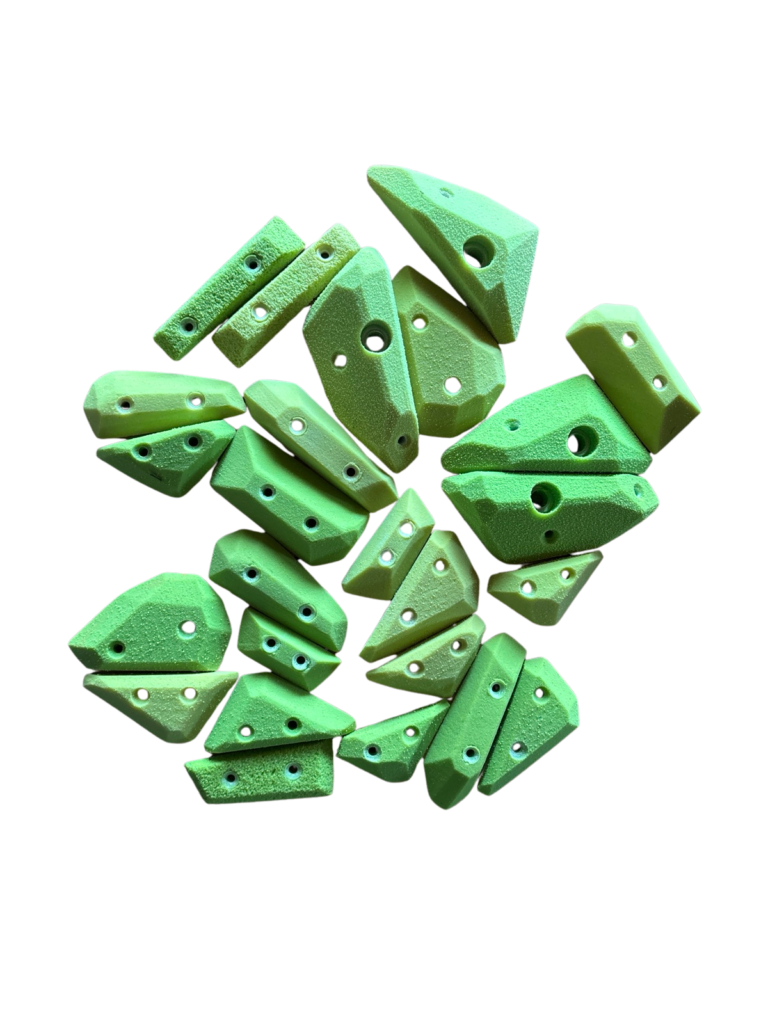
Motor skills benefits: Body control from head to toe
Climbing almost always engages the entire body. This specifically promotes:
- Coordination: Arms, legs and torso must work together in every movement – this trains overall body coordination like hardly any other sport.
- Balance: Children develop a fine sense of balance by balancing on small footholds and shifting their center of gravity.
- Gross and fine motor skills: Large movements during climbing itself and fine adjustments when specifically gripping the holds train both motor levels simultaneously.
- Body awareness: Children learn to better assess their own reach, strength, and position in space.
- Full body strength: arms, torso and legs are strengthened equally – in a child-friendly and playful way instead of through one-sided strength training.
Cognitive benefits: Climbing as brain training
Every climbing route is like a little puzzle – that's what makes climbing so mentally valuable:
- Problem-solving skills: Children have to plan their next move, combine handholds and footholds, and find alternatives if one path doesn't work – real-time problem-solving.
- Concentration and focus: In climbing, every hold counts – distraction is not an option. This trains the ability to concentrate on a task for an extended period of time.
- Spatial reasoning: Planning routes in advance and mentally anticipating movement sequences promotes spatial thinking – a skill that is also useful in mathematics and natural sciences.
- Self-confidence and risk assessment: Children learn to realistically assess their own abilities and decide which move is safe – an important basis for healthy self-assessment.
- Frustration tolerance: Not every attempt succeeds immediately – children learn to deal with setbacks and simply try again.
What parents should pay attention to when climbing with children
To ensure that climbing is safe and enjoyable for children in the long term, it's worth taking a look at a few important points:
- Age-appropriate requirements: Routes and boulders should match the child's physical and motor development level – success experiences motivate more than overwhelming training.
- Care should be taken to protect growth plates: Tendons, ligaments, and growth plates in children's fingers are not yet fully developed. Intensive strength training on small holds should be avoided – the focus should be on technique and movement variety rather than pure finger strength.
- Qualified instruction: Whether climbing gym or children's climbing course – trained supervisory staff ensure the correct belaying technique and age-appropriate exercises.
- Fun instead of performance pressure: Children stay engaged when climbing remains playful. Comparisons with other children or premature performance pressure tend to be demotivating.
- Appropriate equipment: Well-fitting climbing shoes and child-friendly belaying equipment increase both safety and the fun of climbing.
Climbing playfully teaches children skills they need for many areas of life: body awareness, concentration, and the experience of overcoming challenges independently. With age-appropriate holds and the right guidance, the first climbing session quickly turns into a new favorite hobby – feel free to browse our shop for suitable holds for your home climbing wall!
 English
 German