
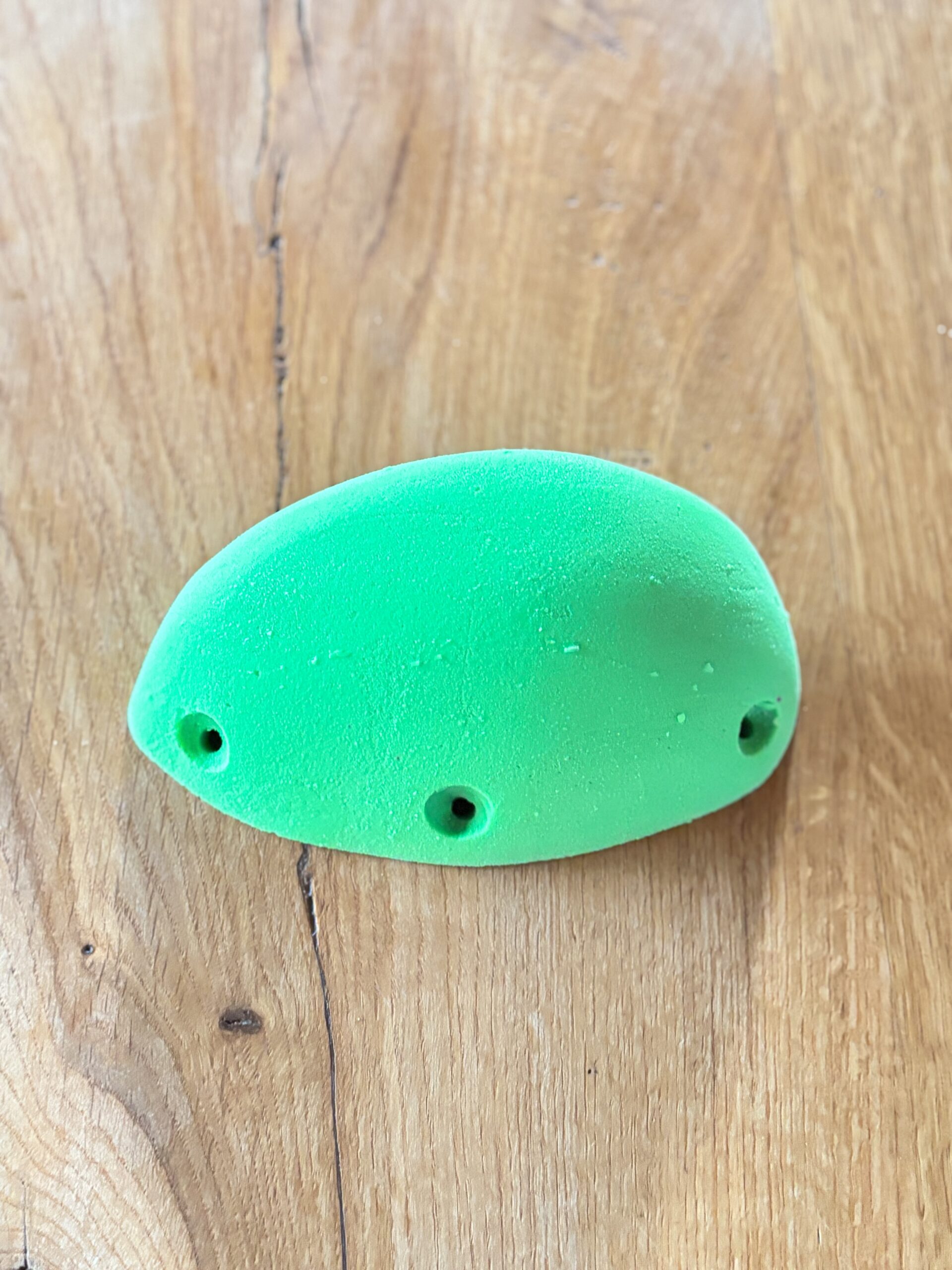
Over time, chalk, skin oils, and dust become embedded in the surface of every climbing wall – the holds become smooth, dark, and noticeably lose friction. With proper care, this process can be significantly slowed down, allowing your climbing holds to remain grippy and retain their shape for longer. Here you'll learn how to properly clean and care for PE and PU holds.
Why regular care is important
Magnesia acts like a fine abrasive dust: combined with skin oils, it clogs the texture of the grip surface, making it noticeably smoother over time. This directly affects friction and therefore safety during training, especially on heavily used routes or holds with a fine texture – such as slopers and crimps. Regular cleaning not only maintains grip but also extends the lifespan of the material.
The right cleaning method: step by step
First, remove loose dirt and chalk dust with a dry brush – a nylon or special grip brush is best as it won't scratch the surface. For embedded coatings, lightly dampen the brush with warm water and work over the texture in circular motions. Then rinse the holds thoroughly or wipe them with a damp cloth and allow them to air dry completely before using them again.
Home remedies vs. special hold cleaners
For most PE and PU holds, warm water with a little mild dish soap is perfectly sufficient. Special grip cleaners from climbing shops usually remove stubborn chalk residue more thoroughly and are formulated for the material. You should avoid aggressive solvents, scouring creams, or hard wire brushes – these attack the surface and can permanently damage delicate structures.
How often should you clean your holds?
For private training walls with normal use, a thorough cleaning every four to six weeks is usually sufficient. Heavily used holds on frequently climbed bouldering problems or in commercially used climbing gyms benefit from a shorter cleaning interval, about every two to three weeks. In between, a quick brushing is often enough to prevent coarse grime from building up in the first place.
Storage and care between cleanings
If holds are temporarily removed, they should be stored in a dry place, protected from direct sunlight, as UV radiation can make the material brittle over time. It's also worth taking a quick look at the screw connections every time you clean the wall: this way you can see early on if a hold needs tightening, ensuring your wall remains safe and easy to grip.
 English
 German