Strong fingers are often the limiting factor in climbing and bouldering – whether gripping a narrow edge or holding onto a slippery sloper. With targeted finger strength training and the right climbing holds, you can specifically improve your grip strength. In this article, we'll show you the most important basics for safe and effective training.
Why finger strength is so important in climbing
Whether you're just starting out with climbing or are already advanced, the strength of your finger holds often determines how long you can hold onto a wall. Targeted training not only improves your climbing performance but also strengthens tendons and ligaments, thus reducing the risk of injury in the long run – provided the training is controlled and accompanied by sufficient rest.
The most important grip types for training
Different climbing holds train different aspects of your finger strength:
- Crimps: Narrow edges that are gripped intensively with the fingertips. Ideal for targeted strength training, but also the most stressful for the finger joints.
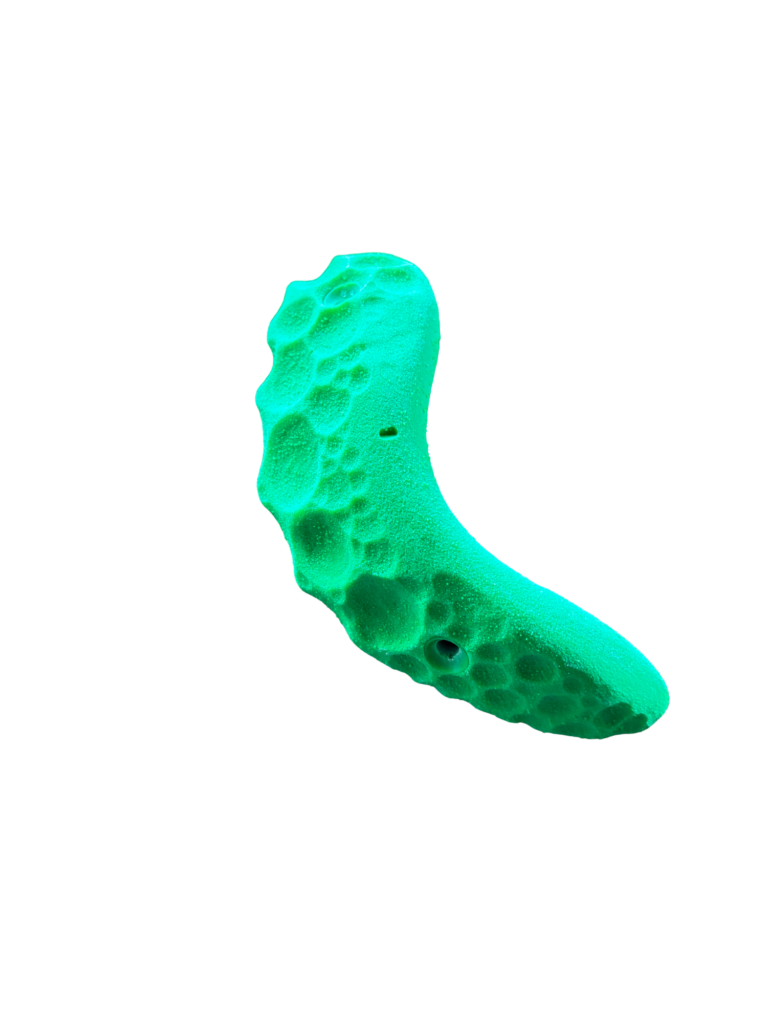
- Sloper: Rounded, low-grip surfaces that primarily require friction and palm strength rather than pure finger strength.
- Pinches: These are squeezed between the thumb and fingers and specifically train thumb and grip strength.
- Jugs: Large, easy-to-grip jugs – perfect for warming up or for calmer training sessions.
- Finger holes (pockets): One or a few fingers grip into a depression – effective, but also particularly demanding for the tendons.
Basics for a sensible training plan
Before you start intensive finger training, remember: technique and basic strength come first. Build up your training gradually and pay attention to the following points:
- Always warm up thoroughly before training on crimps or finger pockets.
- Increase the workload gradually – both in terms of intensity and training duration.
- Plan sufficient rest days between intensive finger training sessions to allow tendons and ligaments to recover.
- Combine different grip types instead of focusing on just one.
Safety first: Here's what you should know
Finger strength training is effective, but also carries a real risk of injury if it is incorrectly dosed:
- Stop immediately if you feel pain in your finger joints or tendons – training despite pain usually only makes the strain worse.
- Never increase the intensity too quickly. Tendons and ligaments take significantly longer than muscles to adapt to new stresses.
- Special care is required with children and adolescents: Since the growth plates in the fingers have not yet completely closed, intensive finger training – especially on crimps – should be avoided and the focus instead placed on technique and variety of movement.
- When in doubt: It's better to skip a training session than to risk an injury.
With the right mix of different grip types, a well-thought-out training plan, and sufficient recovery, you can build sustainable finger strength – without unnecessarily increasing your risk of injury. In our shop, you'll find crimps, slopers, pinches, and more for your individual training. See you next time!
 English
 German