
For many climbing enthusiasts, having their own bouldering wall at home is the ultimate dream: training anytime, without having to travel to a climbing gym, and designed entirely according to their own preferences. With a little planning, the right equipment, and suitable climbing holds, a home wall can be built safely and securely even without professional workshop expertise. This guide shows you step by step what's important.
Proper planning: space, wall angles, and budget
Before sawing the first beam, it's worth taking an honest inventory: How much space is actually available – in the basement, garage, or garden? Even an area of 2 x 2.5 meters is sufficient for a compact training wall. Also consider whether the wall should be built vertically, slightly overhanging, or with an adjustable angle, as this directly affects the difficulty and material requirements. Furthermore, budget for wood, fittings, matting, and the climbing holds themselves.
Materials and tools: What you need
For the substructure, square timber (e.g., 10 x 10 cm) is generally suitable, while robust plywood or screen-printed plywood panels with a thickness of at least 18 mm should be used for the climbing surface. T-slot rails or a grid of T-nuts are also required, allowing for flexible repositioning of the holds later. Tools required include at least a circular saw or jigsaw, a cordless screwdriver, a spirit level, and a drill with appropriate drill bits for the T-nuts.
Step by step: From the substructure to the finished wall
First, the supporting framework is constructed from squared timbers and firmly anchored to the floor, ceiling, or wall – stability is more important than speed here. Next, the climbing panels are screwed onto the framework. Before installation, it's advisable to mark out a grid for the T-slot rails or threaded inserts so that the handholds can be evenly and flexibly distributed later. Finally, the fall protection is installed: a sufficiently thick mat at the base of the wall is essential, especially on overhanging sections.
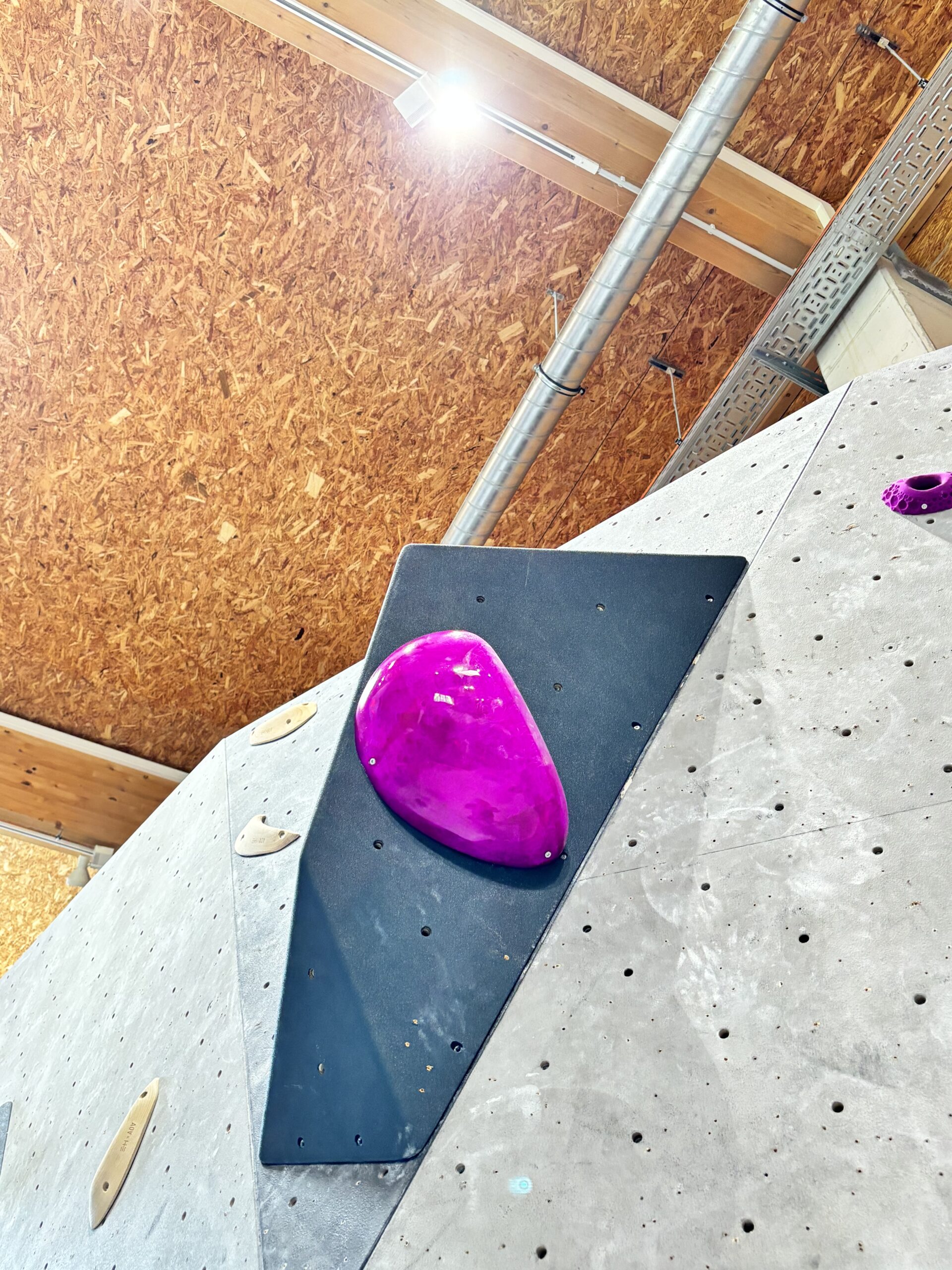
Select and mount the appropriate climbing holds.
For beginners, a mixed set of large, grippy jugs, solid crimps, and a few more challenging slopers or pinches is recommended, so that the wall remains usable for different skill levels. The holds are attached with bolts in the threaded inserts or T-slots – it's important to tighten each hold before its first use and to check the connection regularly.
Home security: What you shouldn't do without
A home climbing wall is no substitute for professional inspection, so extra care is needed: sufficient fall clearance on all sides, a stable and uninterrupted mat covering, and regular checks of all screw connections. Those training with children should also ensure a lower entry height and constant supervision. This will make your home climbing wall a safe place for regular training.
 English
 German